ISF filing
ISF filing software with a clock on every filing
File ISF-10 and ISF-5 with CBP from one inbox. Each filing shows its deadline and alerts your team at 72, 48 and 24 hours before it. Templates, bulk submit and linked house bills keep the volume work short.
20 minutes, on shipments like yours. We set your team up after.

What you file
ISF-10 and ISF-5, both in one place
MyCargoLens files the importer security filing (ISF-10, the "10+2") and the carrier filing (ISF-5) with CBP.
ISF-10
The ten importer data elements: seller, buyer, importer of record number, consignee number, manufacturer, ship-to party, country of origin, HTS code, container stuffing location and consolidator. Filed before the cargo is laden at the foreign port.
ISF-5
For cargo remaining on board (FROB) and other shipments where the carrier files. Booking party and foreign port of unlading included.
We don't sell ISF bonds. You file under your own continuous or single-transaction bond, or your customer's.
On time
Every ISF on a clock, from the moment you create it
CBP wants the ISF-10 at least 24 hours before the cargo is laden on the vessel at the foreign port. MyCargoLens works out that deadline for each filing and puts it on the record, in the list and in the inbox. Your team gets alerts at 72, 48 and 24 hours before it. Drafts with a deadline under 24 hours away are flagged when you open them.
CBP can claim liquidated damages of $5,000 per ISF violation, and each house bill is its own filing. The clock is how you see that risk in time. Source: CBP ISF FAQ 2.0 (opens in a new tab)
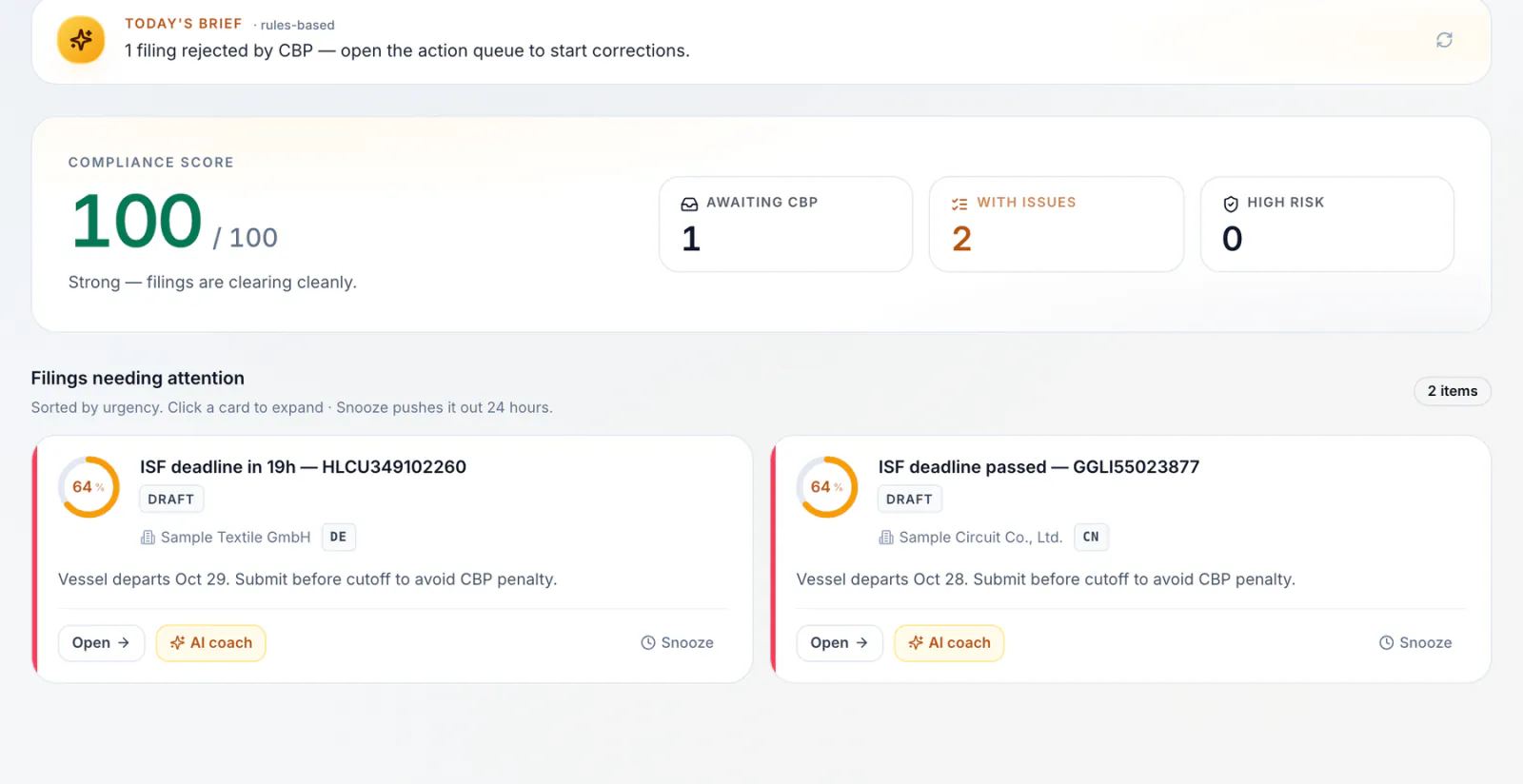
ISF-10 · HBL GGLI55023877
Due in 72hFirst alert
ISF-10 · HBL GGLI55023877
Due in 48hSecond alert
ISF-10 · HBL GGLI55023877
Due in 24hFinal alert
Volume work
Built for the house bills that repeat
Most ISFs repeat. Same seller, same factory, same consolidator, a new bill number. Save the repeat parts once and spend your time on what changed.
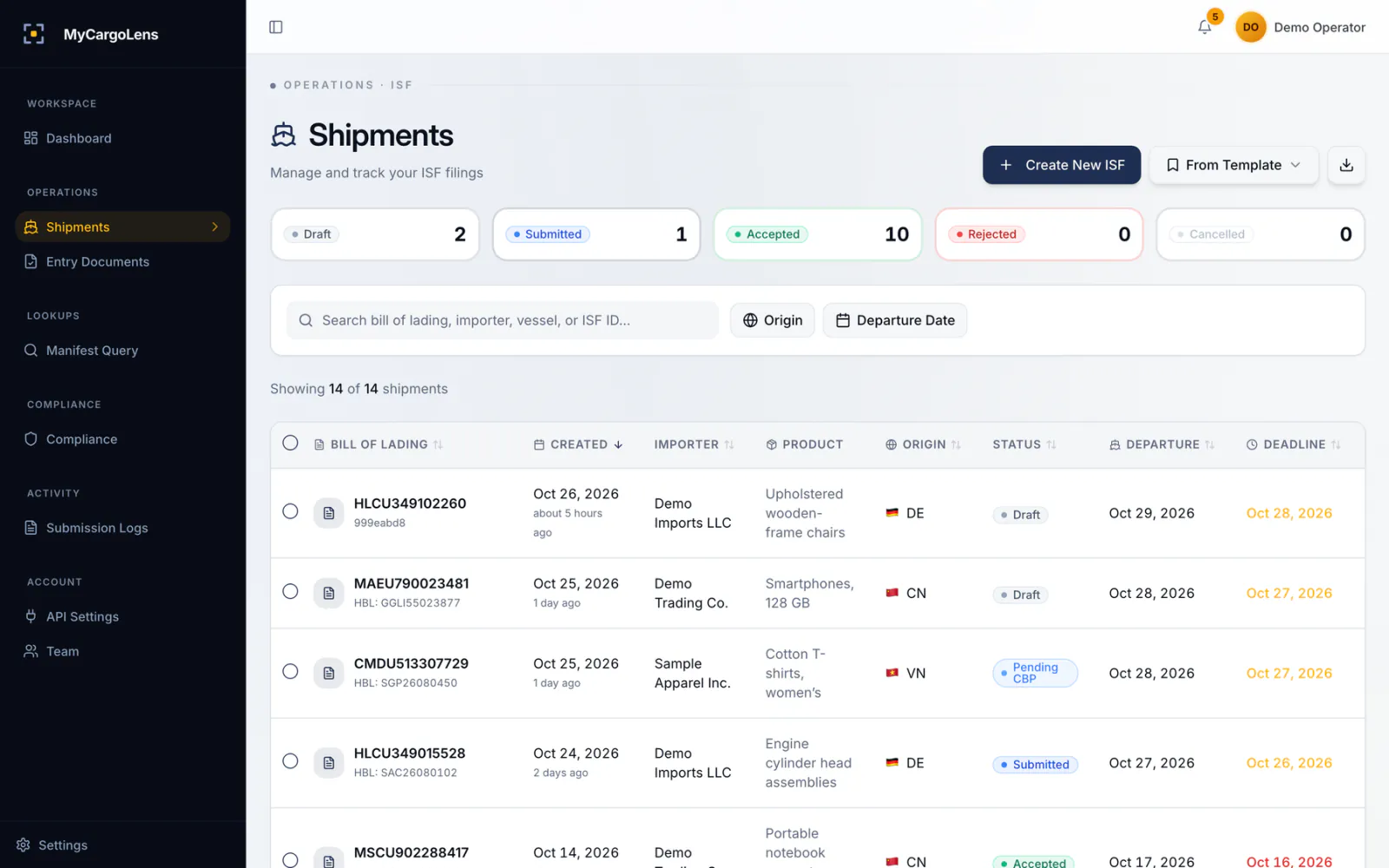
- Templates. Save parties, ports, HTS codes and bond details, then start a new ISF from them.
- Duplicate. Clone any filing and change the bill and dates.
- Bulk submit. Send up to 20 drafts in one action. Each one still goes through the checks first.
- Consolidations. House bills under one master are linked, each with its own deadline. Open one and the siblings are a click away.
Before CBP sees it
Every draft is checked before it goes to CBP
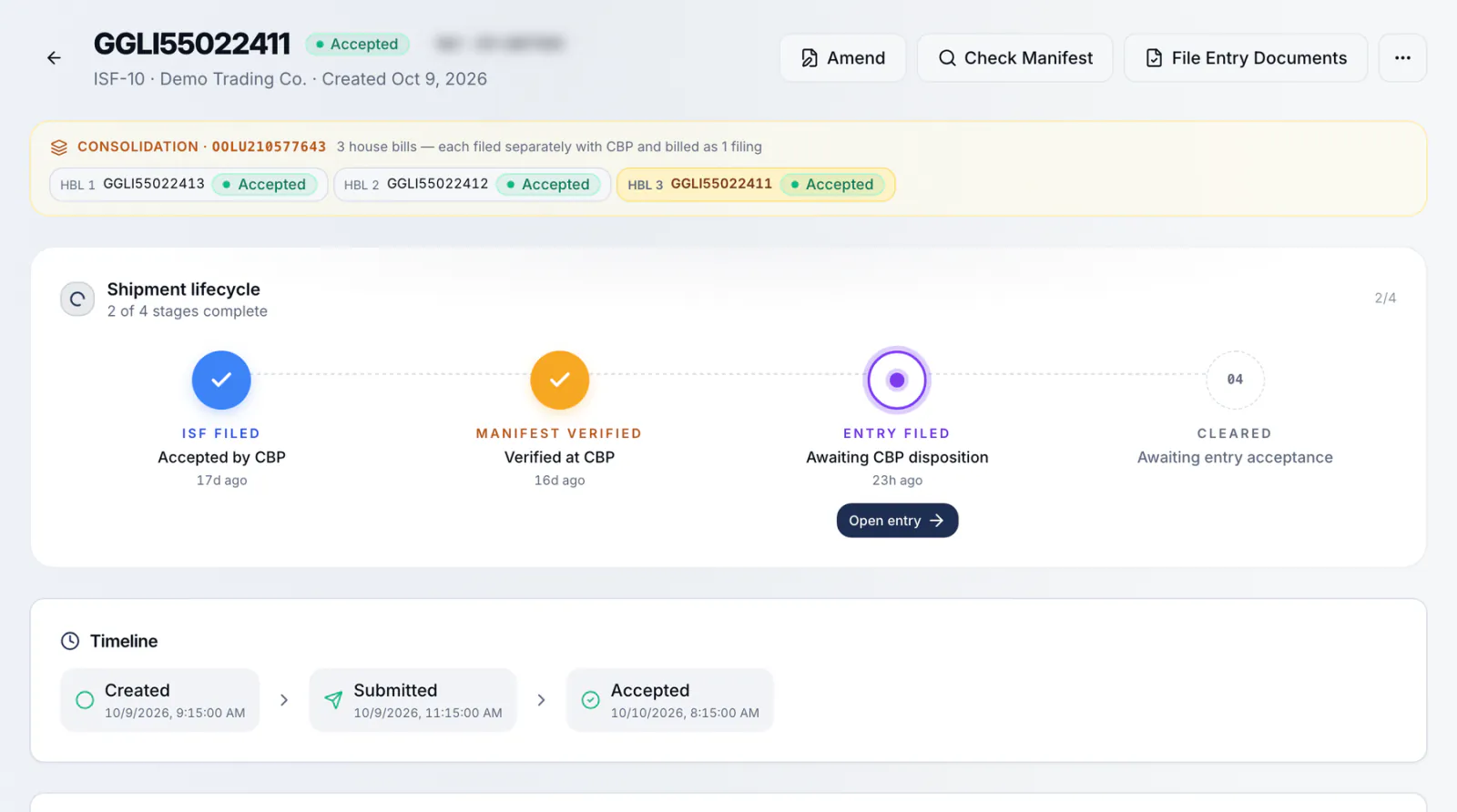
Rule checks run on every ISF before submit: HTS codes between 6 and 10 digits in a valid chapter, two-letter ISO country codes, a four-letter SCAC, arrival after departure, an importer of record number, the ISF-5 booking party. You can also ask for an AI review of any draft.
If CBP rejects a filing anyway, the rejection comes back in plain English with numbered steps to fix it. Fix it and resubmit. You're never charged twice for the same shipment.
After submit
See what CBP said on each filing
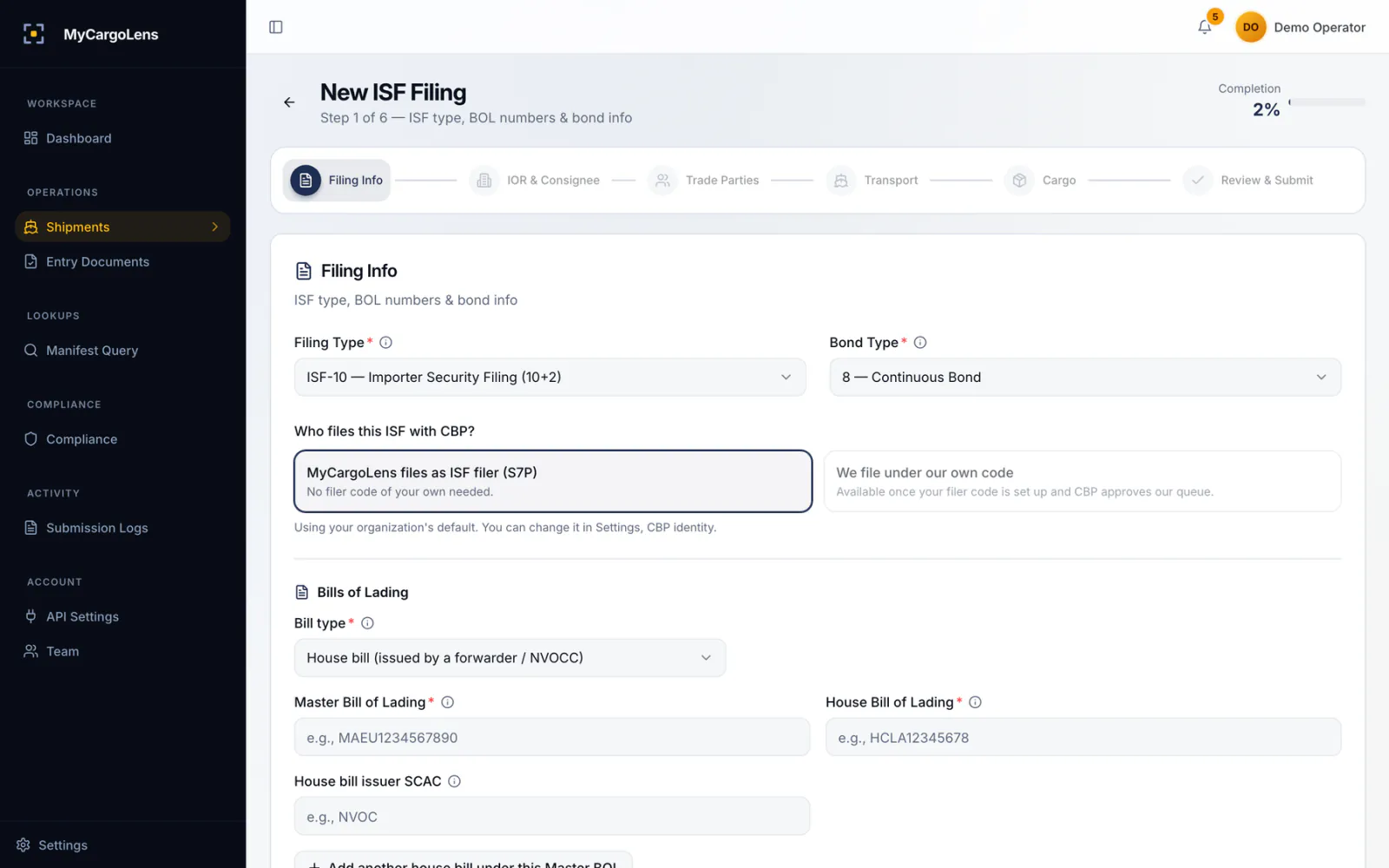
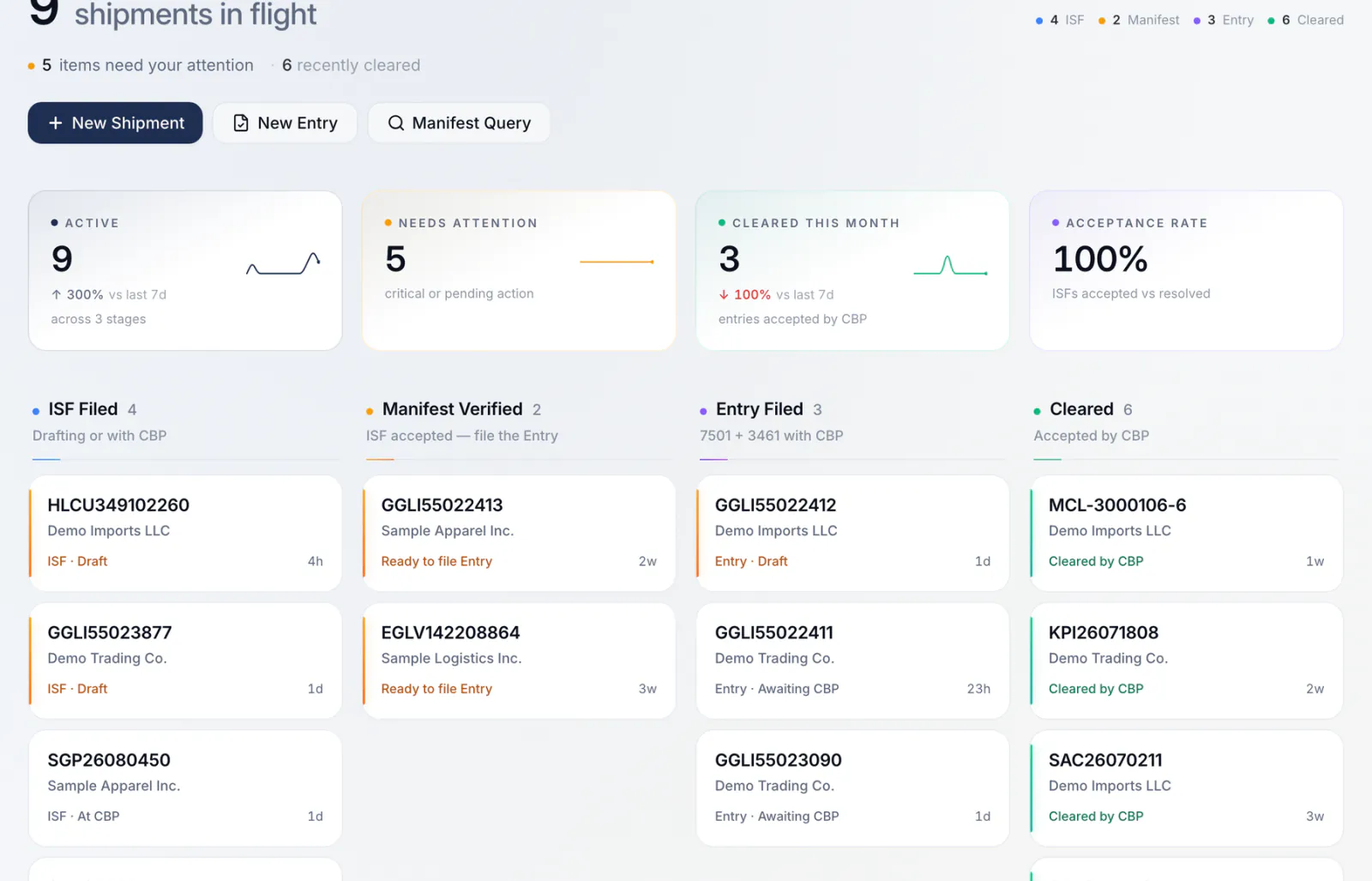
CBP's response moves into the inbox and onto the filing: accepted, rejected or still waiting.
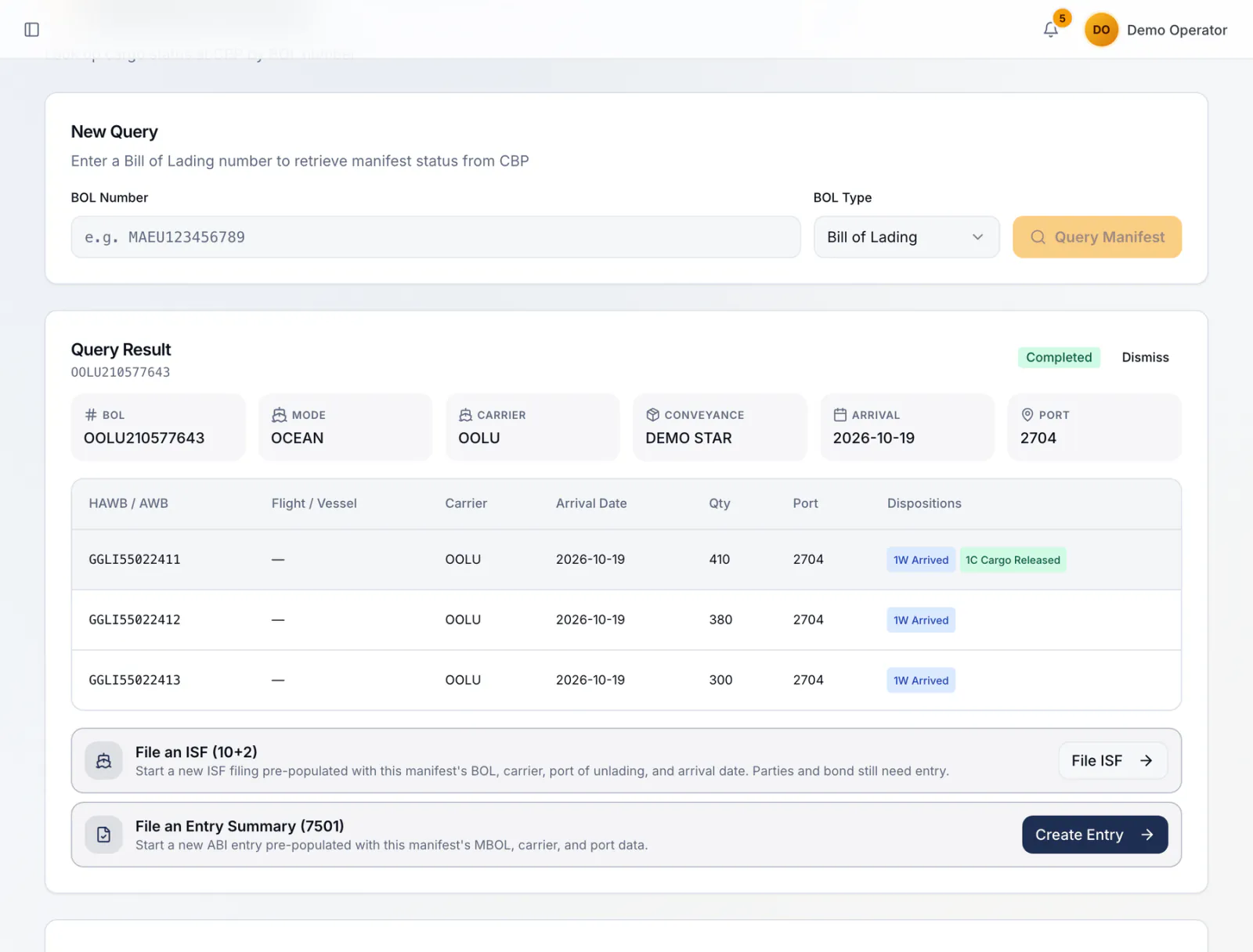
Query by master bill to see CBP's disposition on each house bill. Manifest queries are free, like drafts.
Next step
File the entry from the accepted ISF
When the ISF is accepted, start the entry summary (7501) or cargo release (3461) from it. The parties and bond carry over, and the ISF and entry stay linked on one shipment.
API
Filing from a TMS? Send ISFs through the API
Create and submit ISFs from your own system over REST, in JSON or XML. Status comes back to you as signed webhooks (filing.accepted, filing.rejected). The same checks run on API submissions as in the app.
POST /api/public/v1/shipments/{id}/submit
Authorization: Bearer mcl_live_…

# → webhook filing.accepted | filing.rejected
Questions ISF teams ask us
At least 24 hours before the cargo is laden on the vessel at the foreign port. MyCargoLens calculates that deadline on every filing and alerts you at 72, 48 and 24 hours before it.
CBP can assess liquidated damages of $5,000 per violation, and each house bill counts as its own ISF.
The importer, or an agent filing for them, files the ISF-10. The carrier files the ISF-5 for cargo remaining on board and similar shipments. An NVOCC that issues the bill is often the party filing. MyCargoLens handles both.
Yes. House bills under one master are linked, each with its own deadline clock, and you can submit up to 20 drafts at once.
No. You file under your own bond or your customer's.
MyCargoLens files it with CBP for you, and every request and response is logged on the filing.
Importers filing their own: $45 per accepted ISF, charged only when CBP accepts. NVOCCs, forwarders and brokers filing at volume get volume pricing on request. See pricing or volume pricing.
No. MyCargoLens is software for importers, forwarders, NVOCCs and brokers. You or your broker stay in charge of advice and classification decisions.
Book a demo
See your own ISFs on the clock
Book a 20-minute demo. Bring a recent house bill and we'll file a sample ISF in a demo account while you watch.